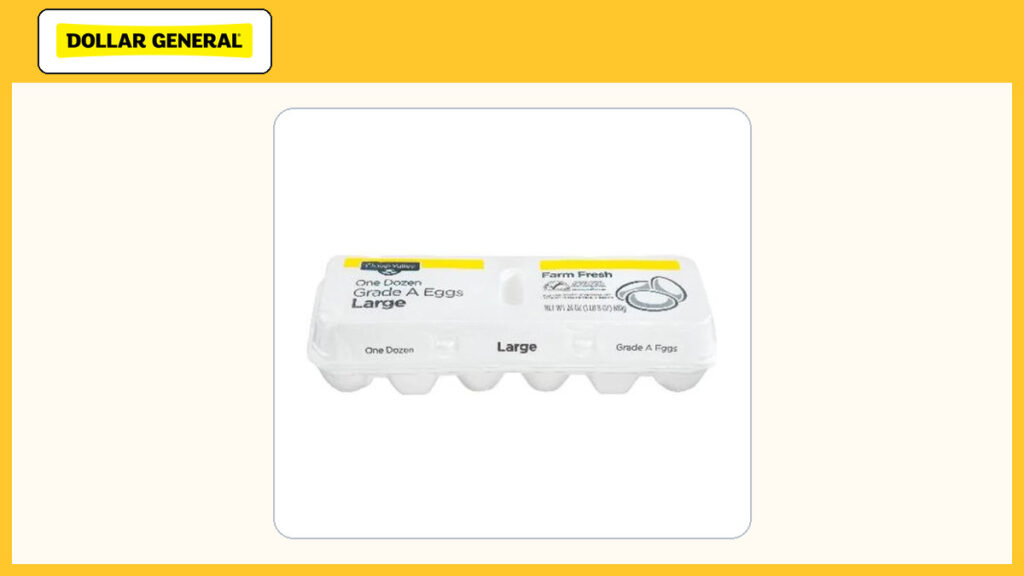
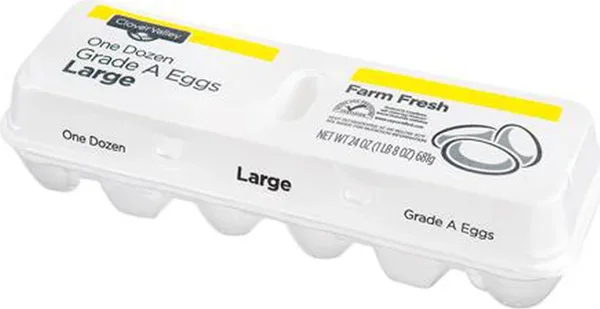
Clover Valley Eggs Large Grade A, Dozen can be a convenient staple, but always open the carton before paying: cracked, leaking, or sticky eggs can turn a seemingly practical Dollar General buy into wasted money and a safety concern.
What you are actually buying
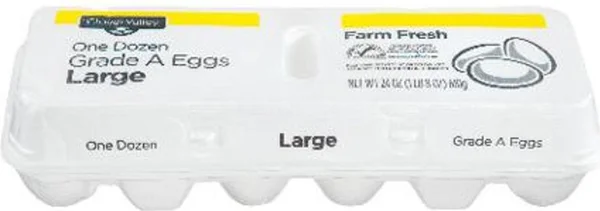
Clover Valley Eggs Large Grade A, Dozen is Dollar General’s private-label carton of 12 standard large Grade A white eggs. They are refrigerated, farm-fresh eggs intended for everyday cooking and baking, with both conventional and cage-free versions available. Look for them in the dairy and egg cooler rather than among shelf-stable breakfast foods.
Each egg has about 70 calories and 6 grams of high-quality protein, so the carton can cover breakfasts, quick meals, and baking without requiring a specialty ingredient. That basic usefulness is the appeal: these are straightforward everyday eggs, not a premium product dressed up with a complicated promise.
| Price | $10.95 or similar; highly variable, with recent reports of $7–$9+ per dozen |
| Size | 12 ct (dozen) |
| Servings | 12 eggs |
| Where to find it | Dairy/egg cooler section in the refrigerated case |
| Availability | Everyday |
| Variants | Large Grade A conventional or Cage Free Grade A Large White |
The carton check matters more than the label
Before putting a carton in your basket, open it. Check every visible shell for cracks or other damage, and look for leaking liquid or stickiness inside the cardboard carton. An egg stuck to the carton can also signal that it leaked earlier. If anything looks questionable, choose a different carton rather than trying to salvage most of the dozen.
This is the most important buying tip because damaged eggs have been a recurring problem at Dollar General, potentially tied to handling, cooler issues, or damaged stock being combined. An intact carton can be a convenient staple protein source; a damaged one creates waste and a possible salmonella risk. I would not let a low price—or the desire to finish a quick shopping trip—talk me into taking cracked eggs home.
Check the refrigerated case, too. The eggs should be coming from the cooler, and their shells should be intact. Finally, look at the pack or Julian date. Retail eggs sold in the United States meet USDA or FDA standards when they have been properly refrigerated and the shells remain undamaged, but that does not replace a thirty-second inspection at the store.
Why these eggs earn a place—and why they sometimes do not
When the carton is intact and the price is reasonable, Clover Valley eggs do exactly what I want a private-label staple to do: provide useful protein for quick meals without charging extra for a national-brand name. They are also versatile enough for ordinary cooking and baking, which makes a dozen more practical than a narrowly specialized breakfast item.
The criticism is just as clear. Condition can be inconsistent, and the price has fluctuated dramatically—from roughly $3–$4 at some points to $7–$9 or more recently, with a listed price of $10.95 or similar. That means these are not an automatic bargain simply because they sit in a Dollar General cooler. The smart move is to judge both the carton and the shelf price every time.
They belong in the same conversation as other Dollar General grocery dupes worth buying over brands, but only when the savings are real. Private label is a useful clue, not proof of value.
The best way to handle and use them
There is no single best cooking method specified for these eggs, and that is part of their usefulness: they are intended for everyday cooking and baking rather than one particular preparation. The definitive guidance here is about handling. Buy only intact eggs from the refrigerated case, take them home promptly, and keep them refrigerated in their original carton.
For best quality, use them within three to five weeks of the pack date. The sell-by date is a guideline, so the pack date and proper refrigeration give you better context than treating one printed date as a magic cutoff. Do not try to make a cracked or leaking egg worthwhile through a particular cooking technique; the better move is to avoid buying damaged shells in the first place.
Since no verified times or temperatures are provided for this product, I would not pretend it needs a special Clover Valley cooking formula. Use the method appropriate to the meal or recipe, while keeping the safety check at the center of the purchase.
Simple pairings that make the dozen useful
No product-specific upgrade recipe is required here. The most practical move is to build meals around familiar Dollar General staples: cheese or bacon can turn the eggs into a more substantial breakfast, while Clover Valley milk or bread covers the other basics people commonly buy alongside them.
I would choose add-ons based on how quickly the dozen will be used rather than buying extras just because they are nearby. Eggs already work across quick meals and baking, so their strongest upgrade is a plan: know which breakfasts, meals, or recipes will use them during that three-to-five-week quality window.
Do the price math before calling them cheap
At $10.95 for 12 eggs, the cost is about 91 cents per egg. At a reported $7–$9 per dozen, it is roughly 58 to 75 cents per egg. That is a major swing for exactly the same count, which is why checking the posted price is nearly as important as checking the shells.
Clover Valley can still be one of the cheaper egg choices at a discount retailer. Name-brand or organic supermarket eggs may cost $4–$6 or more above the Dollar General dozen. Restaurant scrambled eggs, meanwhile, can run about $3–$6 for the equivalent of a serving, so cooking intact eggs at home can remain the better value even during a high-price week.
My verdict changes at the shelf. If the carton is sound and Clover Valley is several dollars below the comparable name-brand dozen, buy it. If the price has climbed close to—or beyond—another store’s option, the private-label name alone is not enough reason. Skip these entirely if the shells are cracked, the carton is leaking or sticky, or you cannot confirm that the eggs have been properly refrigerated.
Quick Questions
Should I open the carton and check the eggs before buying at Dollar General?
Yes. Inspect for cracked or damaged shells, leaks, and stickiness so you do not bring home unnecessary waste or a possible salmonella risk.
How long do Dollar General eggs last?
Keep them refrigerated in their original carton and use them within three to five weeks of the pack date for best quality. Treat the sell-by date as a guideline.
Are Dollar General eggs fresh and safe?
U.S. retail eggs meet USDA or FDA standards when sold refrigerated with intact shells. Check the pack or Julian date, confirm they are cold, and avoid any damaged carton.
Clover Valley Eggs can be a worthwhile everyday buy, but only after two checks: inspect every shell and compare the current price. An intact carton at a meaningful discount gets my yes; damaged eggs or name-brand-level pricing gets an easy pass.