
Some cars do more than just get people from one place to another. Throughout automotive history, certain models have broken barriers and introduced ideas that changed the way we drive forever. These first-of-their-kind cars brought new technologies, bold designs, and engineering breakthroughs that set the stage for everything that followed. They were the pioneers that showed what was possible at a time when no one else dared to try. Many of these cars are remembered as icons because they reshaped the direction of automotive design. Here is a look at some of the first-of-their-kind cars that truly made history.
Contents
- 1 Benz Patent-Motorwagen (1886)
- 2 Benz Velo (1884)
- 3 Ford Quadricycle (1896)
- 4 Peugeot Type 3 (1889)
- 5 Citroen Type A (1919)
- 6 Chevrolet Corvette (1953)
- 7 BMW 328 (1935)
- 8 Volkswagen Beetle (1938)
- 9 Ford Model T (1908)
- 10 Daimler Reitwagen (1885)
- 11 Porsche P1 (1898)
- 12 Tesla Roadster (2008)
- 13 Jeep Cherokee (1984)
- 14 More From RetailShout
- 15 The Top 9 New Aldi Finds of 2025 (So Far)
- 16 10 Costco Food Deals Shoppers Say Are the Best
Benz Patent-Motorwagen (1886)

The Benz Patent-Motorwagen, created by Karl Benz, is widely recognized as the world’s first practical automobile. It featured a single-cylinder, four-stroke engine and had three wheels, offering a simple yet groundbreaking design for its time. With a top speed of 10 mph, it was more of a motorized carriage than the cars we know today, but it laid the foundation for the modern automobile. This vehicle was the first to be powered by an internal combustion engine and demonstrated the potential of gasoline-powered transport. Benz’s invention was not immediately successful, but it eventually caught the attention of the public and became a symbol of the future of transportation. The creation of this automobile was crucial in the establishment of the automobile industry. Today, the Benz Patent-Motorwagen is recognized as a major milestone in automotive history.
Benz Velo (1884)
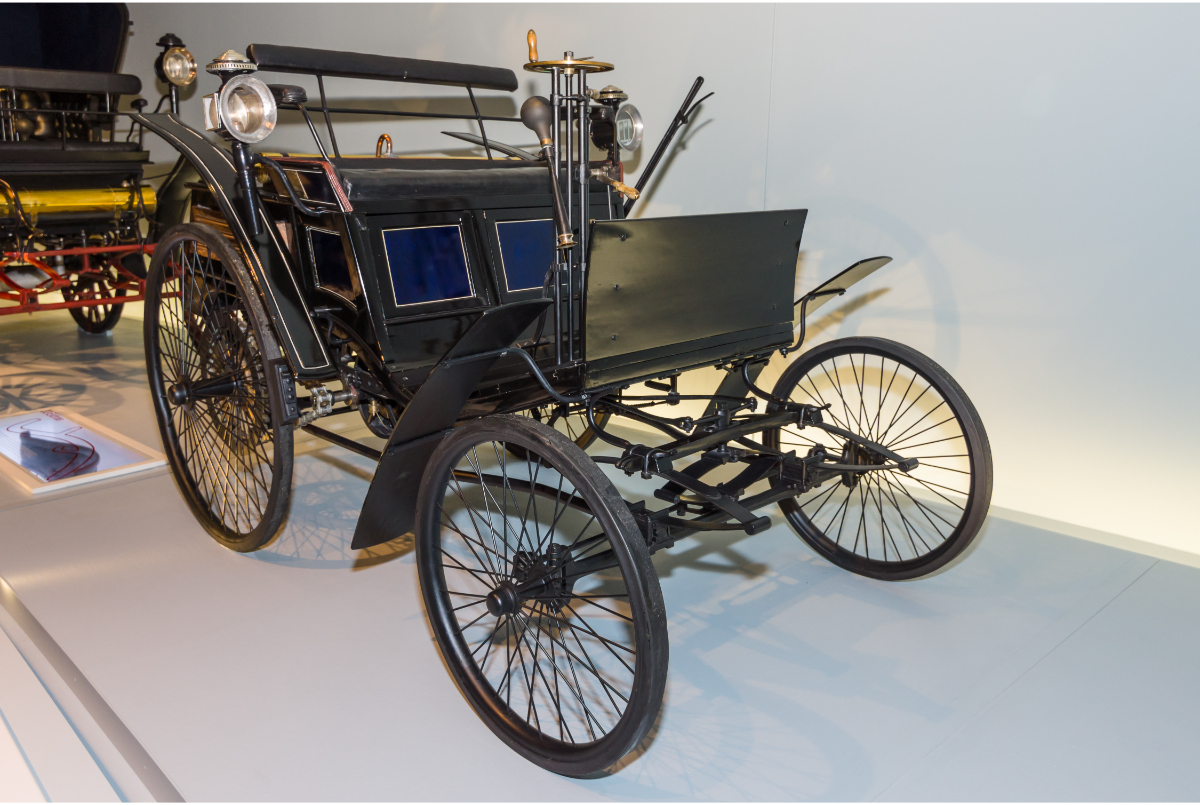
The Benz Velo was the world’s first production car, designed to be affordable, durable, and accessible. It was a small, lightweight vehicle that was easy to operate, making it popular among the upper middle class. Unlike earlier prototypes, the Velo was manufactured in large numbers, with over 1,200 units sold. The car featured a simple yet reliable engine, a chain drive system, and was capable of reaching speeds of around 12 mph. Its success demonstrated that the automobile could be a practical mode of transport for everyday people, not just a luxury item for the elite. The Velo’s popularity helped establish the Benz brand as a leading manufacturer of automobiles. It played a significant role in the early stages of the automotive industry.
Ford Quadricycle (1896)

Henry Ford’s Quadricycle was his first successful attempt at building a car. With a simple design that included four wire-spoked wheels, a two-cylinder engine, and a wooden chassis, it was a significant step in the evolution of modern vehicles. The Quadricycle could reach speeds of up to 20 mph, a remarkable feat at the time. Ford’s creation was not just a technological achievement but a pivotal moment in the founding of the Ford Motor Company. The success of the Quadricycle demonstrated Ford’s skill in engineering and his vision for creating accessible automobiles. This car set the stage for his later development of mass production techniques. It marked the beginning of Ford’s journey to revolutionize the automotive industry.
Peugeot Type 3 (1889)

The Peugeot Type 3 was a steam-powered three-wheeler introduced at the 1889 Paris World Fair. It was one of the first automobiles to be mass-produced, setting Peugeot on the path to becoming one of the oldest car manufacturers in the world. Unlike earlier experimental cars, the Type 3 was designed for commercial use, making it one of the first vehicles to be marketed to the public. Its steam engine was revolutionary, even though it was later surpassed by gasoline-powered engines. The Type 3’s introduction helped shape the early days of automobile production. Peugeot’s early adoption of motor vehicles placed it at the forefront of the automotive revolution. This car demonstrated that the future of transport would not rely on horses but on mechanized vehicles.
Citroen Type A (1919)

The Citroen Type A was the first car ever produced by Citroen, a company that would later become famous for its innovative designs. Introduced in 1919, the Type A was a revolutionary car, not just for its engineering but for its marketing as well. Citroen was the first to introduce large-scale mass production in Europe, making automobiles more affordable and available to a larger portion of the population. The car had a 1.3-liter engine and could reach speeds of around 30 mph. The Type A was praised for its reliability and durability, becoming a symbol of post-World War I innovation. Citroen’s focus on production efficiency and quality was instrumental in shaping modern car manufacturing. It helped cement the company’s place in automotive history.
Chevrolet Corvette (1953)

The Chevrolet Corvette, introduced in 1953, is America’s first true sports car, blending style and performance in a way that had not been seen before. It featured a sleek fiberglass body and a powerful V8 engine, designed to provide an exciting driving experience. The Corvette was an instant hit, and over the years, it became an enduring symbol of American automotive excellence. Its aerodynamic design, paired with powerful engines, made it a performance leader in its class. Through continuous innovation, the Corvette evolved into one of the most iconic sports cars in the world. It is still in production today, making it one of the longest-running car models in history. The Corvette’s cultural significance and performance credentials have made it a favorite among enthusiasts and collectors alike.
BMW 328 (1935)

The BMW 328 was a lightweight roadster that became a legend for its success in racing. Its advanced engineering, including a streamlined body and a six-cylinder engine, made it one of the fastest and most efficient cars of its time. The 328 won numerous competitions, including the famous Mille Miglia race in 1940. Its success on the racetrack was a testament to BMW’s commitment to performance and innovation. The car’s design influenced future sports cars, with its aerodynamic body shape setting the standard for many subsequent models. It was both a highly functional race car and a stylish roadster that attracted a dedicated following. The BMW 328 remains one of the brand’s most iconic vehicles.
Volkswagen Beetle (1938)

The Volkswagen Beetle is one of the most iconic cars ever made, known for its unique round shape and reliable performance. Originally designed by Ferdinand Porsche at the request of Adolf Hitler, the Beetle was meant to be an affordable, everyday car for the people. After World War II, the Beetle became a symbol of post-war recovery, particularly in the United States, where it became a cultural phenomenon. Its simple, durable design and affordability made it one of the best-selling cars in history, with over 21 million units sold worldwide. The Beetle was produced in various versions over the years, and it was praised for its innovative rear-engine layout. The car’s impact on both the automotive industry and pop culture has been profound, with the Beetle maintaining a loyal fanbase to this day. Its design influenced countless other cars, and it remains a classic symbol of automotive history.
Ford Model T (1908)

The Ford Model T revolutionized the automotive world by introducing mass production to car manufacturing. Henry Ford’s implementation of assembly line techniques drastically lowered the cost of production, making the car affordable for the average American. This led to the Model T’s widespread popularity, with more than 15 million units sold between 1908 and 1927. The car was praised for its simplicity and durability, making it ideal for rural areas and rough terrain. The Model T’s introduction changed the way people viewed automobiles, turning them from a luxury for the wealthy into a tool for everyday transportation. It was a key driver in the rapid expansion of the automobile industry. The Model T is often regarded as the car that put America on wheels and marked the beginning of the car’s dominance in modern society.
Daimler Reitwagen (1885)

The Daimler Reitwagen, created by Gottlieb Daimler and Wilhelm Maybach, is considered the world’s first true motorcycle. Powered by a gasoline engine, the Reitwagen was a two-wheeled vehicle that provided a glimpse into the future of personal transportation. While it was not a commercially successful product, the Reitwagen’s design and engine technology were groundbreaking at the time. Its engine was capable of reaching speeds of up to 7 mph, making it one of the fastest vehicles of its era. This invention laid the groundwork for the development of modern motorcycles and two-wheeled transport. Daimler and Maybach’s innovative work in the development of the Reitwagen also led to the creation of the first practical automobile. The Reitwagen is an essential part of automotive history, marking the birth of both the automobile and the motorcycle industries.
Porsche P1 (1898)

The Porsche P1 was Ferdinand Porsche’s first vehicle, and it was an electric car that showcased his forward-thinking approach to automotive engineering. Built as a prototype, the P1 was a groundbreaking attempt at using electric power for transportation, a concept that would not gain widespread popularity until much later in history. The car was ahead of its time, featuring a simple yet effective electric drivetrain and a lightweight design. Though it was never mass-produced, the P1 set the stage for Porsche’s later successes in the automotive world. Porsche’s work on the P1 demonstrated his technical prowess and innovation, leading to the development of some of the most iconic sports cars in history. The P1 remains a historical curiosity, highlighting the early experimentation with electric vehicles. It stands as a testament to Porsche’s early contributions to automotive technology.
Tesla Roadster (2008)

The Tesla Roadster was a groundbreaking electric vehicle that proved electric cars could offer high performance. It was the first production car to use lithium-ion battery cells, which allowed it to travel over 200 miles on a single charge. With a top speed of 125 mph and acceleration that rivaled many sports cars, the Roadster demonstrated that electric vehicles could be both practical and exciting to drive. The car’s success helped establish Tesla as a leader in the electric vehicle market, paving the way for future electric cars with longer ranges and more affordable prices. It also changed the perception of electric vehicles, showcasing that they could offer high performance without sacrificing environmental benefits. The Roadster played a key role in sparking the rise of electric vehicles in the mainstream automotive market. Today, it remains a symbol of Tesla’s innovation and commitment to sustainability.
Jeep Cherokee (1984)

The Jeep Cherokee, introduced in 1984, is credited with popularizing the SUV segment. Its combination of off-road capability, rugged design, and everyday usability made it a hit with a wide range of consumers. The Cherokee was one of the first vehicles to use a unibody construction, making it lighter and more fuel-efficient than traditional body-on-frame SUVs. Its advanced four-wheel-drive system allowed it to handle tough terrain while still offering a comfortable ride on paved roads. The Cherokee’s success helped establish the SUV as a mainstream vehicle in America and around the world. It also influenced the development of countless other SUVs that followed. Today, the Jeep Cherokee is an enduring symbol of Jeep’s legacy of off-road adventure and versatility.
This article originally appeared on RetailShout.
More From RetailShout
12 Ultra-Rare Luxury Cars Worth a Fortune

Luxury cars have always represented more than transportation. They are symbols of status, design, and engineering excellence. Among these, there are select models that stand out due to their extreme rarity and astonishing market values. These vehicles are often produced in very limited numbers, with some existing as single one-off creations for private clients. Read More.
The Top 9 New Aldi Finds of 2025 (So Far)

Aldi has already rolled out some exciting new finds this year, and shoppers are buzzing about them. From frozen desserts that feel like a sweet indulgence to savory snacks that pack in flavor, the shelves have been filled with products worth talking about. Many of these items are limited time specials, which makes the thrill of spotting them in store even better. Read More.
10 Costco Food Deals Shoppers Say Are the Best

Costco is known for offering great value on a wide range of products, and their food deals are no exception. From ready-to-eat meals to pantry essentials, there are plenty of items shoppers rave about. Many of these food deals are both convenient and affordable, making them a must-have for families and individuals alike. Read More.