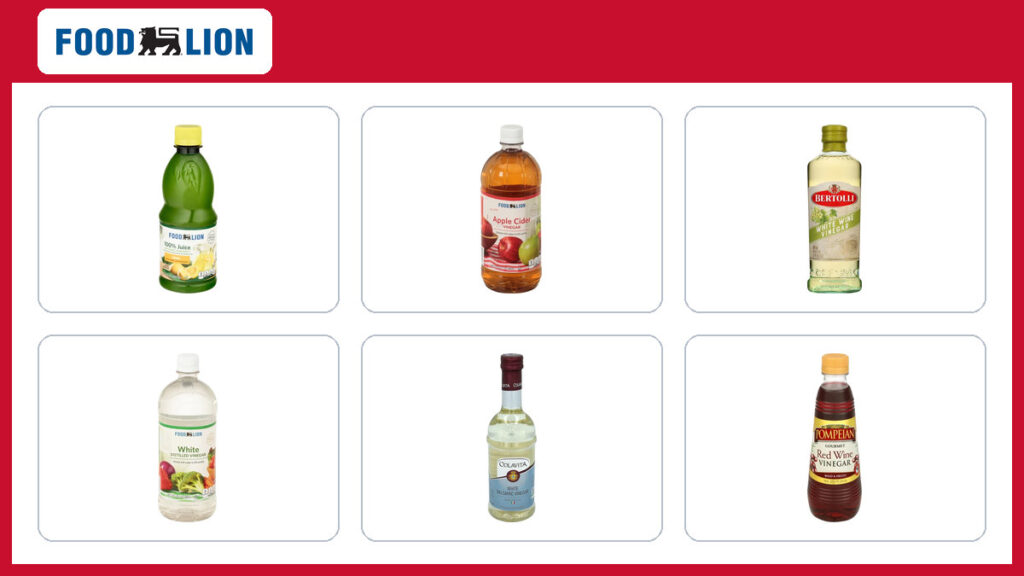
Rice vinegar is specific enough that most substitutes fall short — until the actual job it’s doing gets mapped. These six Food Lion options cover that ground, matching different facets of its acidity so the right swap is already there.
Prices were checked at foodlion.com on November 21; they vary by store and change with each week’s ad.
1. Bertolli White Wine Vinegar – $3.99
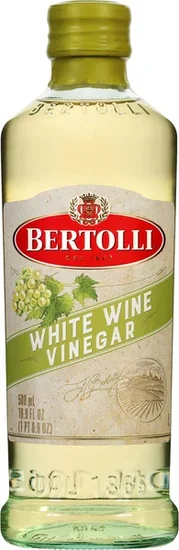
White wine vinegar lands closest to rice vinegar’s clean profile — it swaps in at roughly 1:1 for vinaigrettes, sauces, and stir-fries without altering color or muddying other flavors. At 6% acidity, it runs slightly sharper than most rice vinegar, so a pinch of sugar is the standard correction. The 16.9 oz bottle keeps indefinitely on the shelf.
Taste: Crisp and pronounced, with a dry grape-wine fruitiness that reads as sharp acidity on first taste. In cooked sauces the edge softens considerably; in cold vinaigrettes, the extra sharpness over rice vinegar shows most clearly — that is where the sugar pinch matters most.
Make It Better: Whisk a small pinch of granulated sugar into the vinegar before adding it to any recipe that calls for seasoned rice vinegar; the results track closely.
Worth It?: Worth it — the most reliable 1:1 substitute here, and $3.99 for 16.9 oz is fair for something that performs in nearly every context rice vinegar covers.
2. Food Lion Apple Cider Vinegar – $2.49
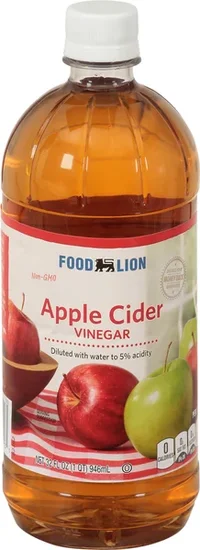
Sushi rice, quick-pickled slaws, and noodle dressings are where this store-brand bottle earns its place — the mild fruitiness of apple cider vinegar shadows rice vinegar’s character more convincingly than harsh distilled white. At 5% acidity with a Non-GMO label, the 32 oz bottle at $2.49 makes more sense as a permanent pantry fixture than a one-time emergency substitute.
Taste: Soft and gently fruity, with just enough tang to sharpen a dressing without announcing itself. The apple note is present but quiet — none of the assertive punch found in raw cider vinegars marketed for wellness.
Make It Better: Start at 1:1 and add a pinch of sugar for recipes that specify seasoned rice vinegar; the flavor integrates nearly invisibly in marinated cucumbers and cold noodle dishes.
Worth It?: At $2.49 for 32 ounces, this is the better buy between the two store-brand options here, and the flavor gets closer to rice vinegar’s character than the distilled version does.
3. Food Lion White Distilled Vinegar – $1.79
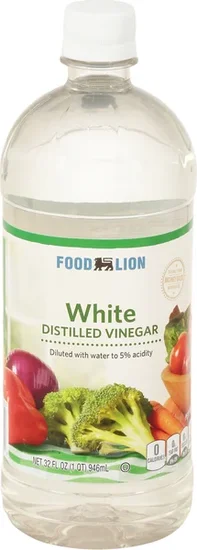
At $1.79 for 32 ounces, this is the most economical option in the list, and it performs reliably in marinades, braises, and strongly flavored cooked dishes where precision matters less. The flavor is clean and neutral but sharper and drier than rice vinegar, which makes it the right foundation for a sugar-and-water correction rather than a straight swap.
Taste: Stark and direct — sharp acidic punch with zero fruitiness or sweetness. The 5% acidity hits blunt and clean; with the dilution-and-sugar adjustment, the gap from rice vinegar narrows enough to work in most recipes, though the fermented character does not return.
Make It Better: For each tablespoon of rice vinegar a recipe calls for, combine about 2½ teaspoons of this vinegar with ½ teaspoon water and a pinch of sugar — the dilution and sweetening narrow the flavor gap considerably.
Worth It?: Fine for marinades and cooked dishes where rice vinegar’s delicate sweetness is not the defining element; anyone trying to match the exact character should reach for the apple cider or white wine versions first.
4. Food Lion 100% Lemon Juice – $1.99
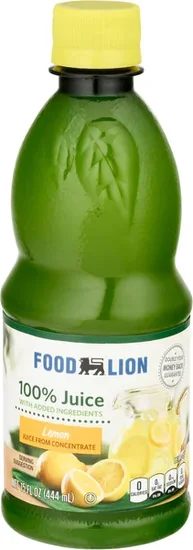
Bright, assertive acidity with a recognizable citrus note — the lemon juice from concentrate in this 15 oz bottle supplies the sourness that rice vinegar provides in dressings, noodle salads, and cooked sauces, without requiring fresh fruit. The shelf-stable format means no spoilage and no last-minute squeezing.
Taste: Sharp and distinctly citrus, with a clean lemon tang that works in Thai-style slaws and dressings but announces itself in Japanese-style preparations where rice vinegar’s fermented subtlety is part of the dish’s character. The flavor shift is detectable.
Make It Better: Use roughly 1:1 and add a pinch of sugar; it integrates best in cilantro-and-chile-forward dishes where citrus already belongs — in sushi rice or plain dipping sauces, the lemon note will be noticeable.
Worth It?: Useful in a pinch and good at what it does, but honest about the trade-off: the citrus character it brings is not easily hidden in simple preparations.
5. Colavita White Balsamic Vinegar – $6.20
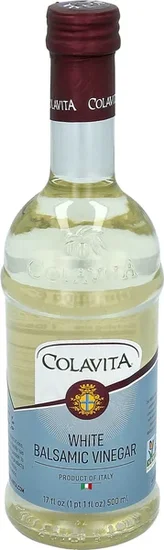
Pale slaws, light vinaigrettes, and sushi rice that would turn muddy under dark balsamic get a better deal from white balsamic — the grape sweetness naturally handles what a sugar addition normally covers, and the 5.4% acidity fills the sour side. Colavita’s Non-GMO Project–verified 17 oz bottle is made from concentrated grape must combined with white wine vinegar.
Taste: Sweet and delicate, with a rounded grape fruitiness underneath the acidity — rounder and more complex than plain white wine vinegar, without the sharp edge that needs correcting. Some sedimentation is normal and does not affect the flavor.
Make It Better: Start with slightly less than a 1:1 swap; the concentrated grape must pushes sweetness quickly, and over-pouring can dominate a vinaigrette before the imbalance is obvious.
Worth It?: The priciest bottle at $6.20, but the sweetness built in means less adjusting on the fly — worth it for pale dressings and rice dishes where the flavor balance has to land right.
6. Mizkan Mirin Sweet Cooking Seasoning – $3.59
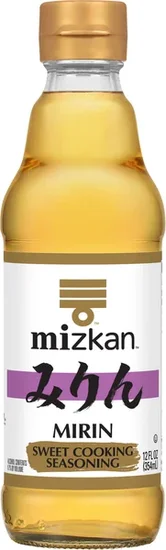
Mirin is not a standalone acid — it lacks rice vinegar’s sharpness entirely — but blended with a small measure of white distilled vinegar, it reconstructs the sweet-sour balance that makes seasoned sushi rice and cooked glazes distinctive. Mizkan’s 12 oz bottle carries both sweetness and savory depth in its profile, which affects the total seasoning in a recipe.
Taste: Syrupy and sweet, with a mild fermented-rice complexity and faint savory depth that plain vinegar cannot supply on its own. It coats sauces and glazes with a subtle sheen and rounds off any harshness from the vinegar it partners with.
Make It Better: Combine a measured amount with white distilled vinegar and taste as you go — the two together track seasoned rice vinegar closely in cooked preparations; account for the added sweetness and salt when seasoning the final dish.
Worth It?: Not a swap by itself, but the right partner for white distilled vinegar when the goal is seasoned rice vinegar’s exact sweet-sour character in a cooked sauce or rice preparation.